
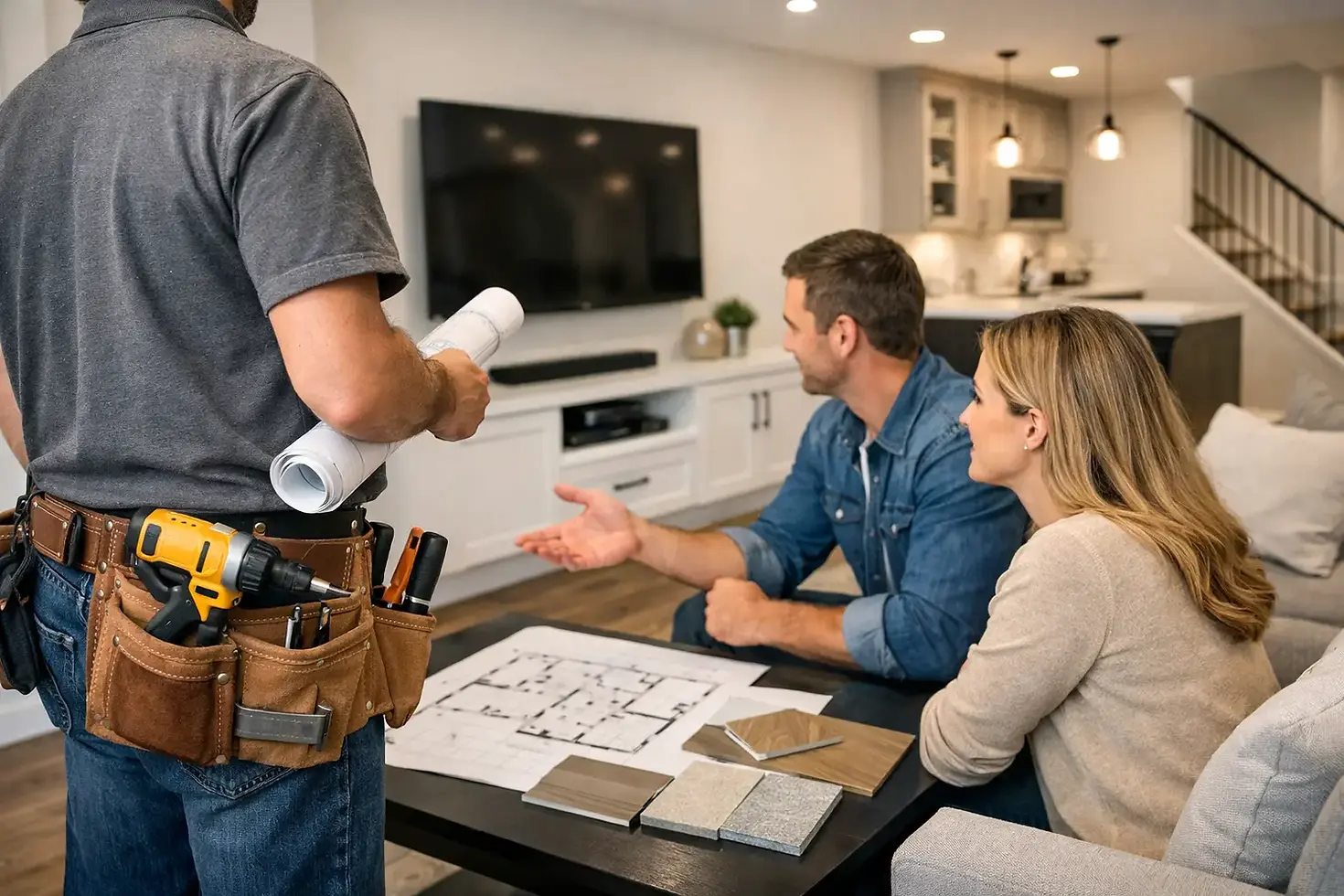
Choosing an Ottawa Basement Finishing Contractor
A basement renovation usually starts with a simple thought: we need more usable space. Then the questions show up fast. Will it feel bright enough? Do we need permits? How much will it cost to add a bathroom, office, or legal secondary suite? Choosing the right Ottawa basement finishing contractor matters because the basement is one of the easiest places to gain living space, but it is also one of the easiest areas to get wrong.
A well-finished basement should feel like part of the home, not an afterthought. That means more than new drywall and flooring. It means planning for moisture, ceiling height, insulation, lighting, layout, electrical work, and the way your family will actually use the space over time. When those details are handled properly from the start, the project feels smoother and the result lasts longer.
What a good Ottawa basement finishing contractor should handle
Basement projects often look straightforward from the outside, but they involve more moving parts than many homeowners expect. A dependable contractor should be able to guide the full process, not just the construction phase. That includes the initial consultation, layout planning, material decisions, permit support where required, scheduling trades, and final finishing.
This matters because basements rarely follow a one-size-fits-all formula. One homeowner may want a family room with built-in storage and better lighting. Another may need a guest bedroom, home gym, and a compact bathroom. Someone else may be thinking about rental potential and code requirements. The right contractor helps you sort through those goals early, before decisions become expensive to change.
A full-service approach is often the least stressful route. Instead of coordinating designers, trades, and permit questions on your own, you work with one team that can explain options clearly and keep the project moving. That kind of support is especially valuable in a basement, where hidden conditions can affect the plan once construction begins.
Basement finishing is not just cosmetic
The biggest misconception about basement renovations is that they are mostly about finishes. Paint colour, flooring, trim, and fixtures do matter, but the real success of the project is built behind the walls.
Moisture control is usually the first issue to consider. Basements are below grade, which means they are naturally more vulnerable to dampness, temperature swings, and air quality concerns than upper levels. If a contractor moves straight to framing and drywall without addressing those realities, the finished space may look good for a while but create frustration later.
Insulation and sound control also deserve attention. If the basement will be used as a TV room, office, bedroom, or rental area, privacy and comfort matter. Pot lights and layered lighting can solve the common problem of dark ceilings, but lighting placement should work with the room layout, not simply be spaced evenly across the ceiling.
The practical details are what make a basement feel finished in the true sense of the word. This is where experience shows.
How to plan the right basement for your home
Before comparing finishes, it helps to decide what the space needs to do. A basement can be a rec room, home office, playroom, in-law space, workout area, bar, guest suite, or some combination of several uses. The best layout usually balances what you want now with what might add flexibility later.
For families, open space often matters more than squeezing in too many separate rooms. For working professionals, acoustic separation for an office may be worth more than a larger lounge area. For homeowners thinking about resale, an extra bedroom and bathroom can improve function and market appeal, but only if the layout still feels natural.
There are trade-offs. A basement with many enclosed rooms may offer more privacy, but it can also feel smaller and darker. An open concept design may feel brighter and more inviting, but storage and noise control need more thought. This is where design guidance becomes useful. A good contractor will not push a standard plan. They will ask how you live, what frustrates you about the current space, and where your budget should work hardest.
What affects basement finishing costs
Cost is one of the first questions homeowners ask, and fairly so. Basement renovations can vary widely depending on the size of the space and the level of complexity. A simple open finished basement will cost less than a project with a bathroom, wet bar, custom millwork, upgraded flooring, or significant electrical changes.
Existing conditions also affect the budget. If the basement needs framing corrections, plumbing adjustments, low-ceiling solutions, or moisture-related prep work, those items should be addressed before finishes go in. That can raise the project cost, but it is usually the better decision than covering over problems.
The clearest estimates are the most helpful. Homeowners should understand what is included, what may be an allowance, and what could change if hidden issues are discovered. Transparent pricing does not mean the lowest number. It means fewer surprises and better planning.
Questions to ask before hiring a contractor
When speaking with an Ottawa basement finishing contractor, ask how they manage the project from beginning to end. You want to know who handles permits, who coordinates trades, how communication works, and what happens if you want to adjust part of the plan during construction.
It is also worth asking about licensing and insurance, expected timelines, and how they approach basement-specific concerns such as insulation, ventilation, and code compliance. A professional contractor should be comfortable answering these questions in plain language.
The tone of the conversation matters too. Renovations go better when the contractor is organized, responsive, and realistic. If someone avoids details, gives vague pricing, or promises an unusually fast timeline without explaining how, that is worth noticing.
A strong contractor-client relationship is built on clarity. Homeowners should feel informed, not pressured.
Why communication makes a basement project easier
Most renovation stress comes from uncertainty, not from the work itself. People can handle dust, noise, and temporary disruption if they know what is happening and what comes next. What creates anxiety is silence, shifting expectations, or confusion around costs and decisions.
That is why communication is not a soft extra. It is part of good project management. You should know the scope, the schedule, the key milestones, and the process for handling changes. If a product is delayed or an on-site issue appears, your contractor should explain the options and recommend a practical path forward.
This is one reason many homeowners prefer working with a full-service team such as Swift Construction. When design support, planning, construction, and final detailing are handled under one process, there is less back-and-forth and less room for things to get lost.
Signs your basement renovation is being planned properly
A properly planned basement renovation usually feels thoughtful before any work begins. The layout makes sense. The estimate is detailed. The contractor has discussed permits if they apply. Lighting, storage, and mechanical access have been considered. There is a clear plan for how the space will function, not just how it will look.
You should also see attention to long-term use. That may include durable flooring choices, practical storage, bathroom rough-ins, or future flexibility if your needs change. Good planning is not about overbuilding. It is about making smart decisions once, instead of correcting missed details later.
For Ottawa homeowners, local experience can also help. Basement conditions, seasonal humidity, and permit expectations are not abstract issues. A contractor familiar with this work in the area is more likely to anticipate the details that affect comfort, compliance, and timing.
The right result should feel easy to live with
A finished basement should give you more than added square footage. It should make the home work better. That could mean a quieter place to work, a comfortable area for family movie nights, a guest space that feels private, or a lower level that finally looks and feels complete.
The right contractor helps you get there without making the process harder than it needs to be. They bring structure to the decisions, quality to the build, and enough communication that you are never left guessing. If you are planning to finish your basement, look for a team that treats the project as a full living-space transformation, not just a construction checklist.
A good basement renovation does not ask you to choose between craftsmanship and peace of mind. You should expect both.


Comments