
10 Best Kitchen Storage Upgrades That Work
- Michael D
- May 8
- 6 min read
You notice kitchen storage problems in the middle of ordinary moments - when the pot lid avalanche starts, when the spice jar you need is somehow behind everything else, or when a deep lower cabinet turns into a black hole. That is why the best kitchen storage upgrades are not just about adding more space. They are about making your kitchen easier to use every single day.
A good storage plan should match how your household actually cooks, cleans, and moves through the room. For some homeowners, that means creating better pantry access. For others, it means making room for small appliances without covering every inch of counter. The right answer depends on your layout, cabinet sizes, and renovation goals, but there are a few upgrades that consistently deliver real value.
What makes the best kitchen storage upgrades worth it
The most effective upgrades do two things at once. They increase usable storage, and they reduce friction in your routine. That might mean fewer steps while cooking, less bending to reach heavy cookware, or less time spent searching through cluttered shelves.
This is where many kitchens fall short. On paper, they have enough cabinets. In practice, the storage is awkward, hard to access, or poorly divided. A full renovation gives you the chance to fix those underlying issues instead of simply organizing around them.
It is also worth thinking beyond resale language like “more storage.” Buyers and homeowners respond to kitchens that feel calm, functional, and thoughtfully planned. Better storage supports that feeling in a very visible way.
Best kitchen storage upgrades for everyday function
1. Deep drawer base cabinets
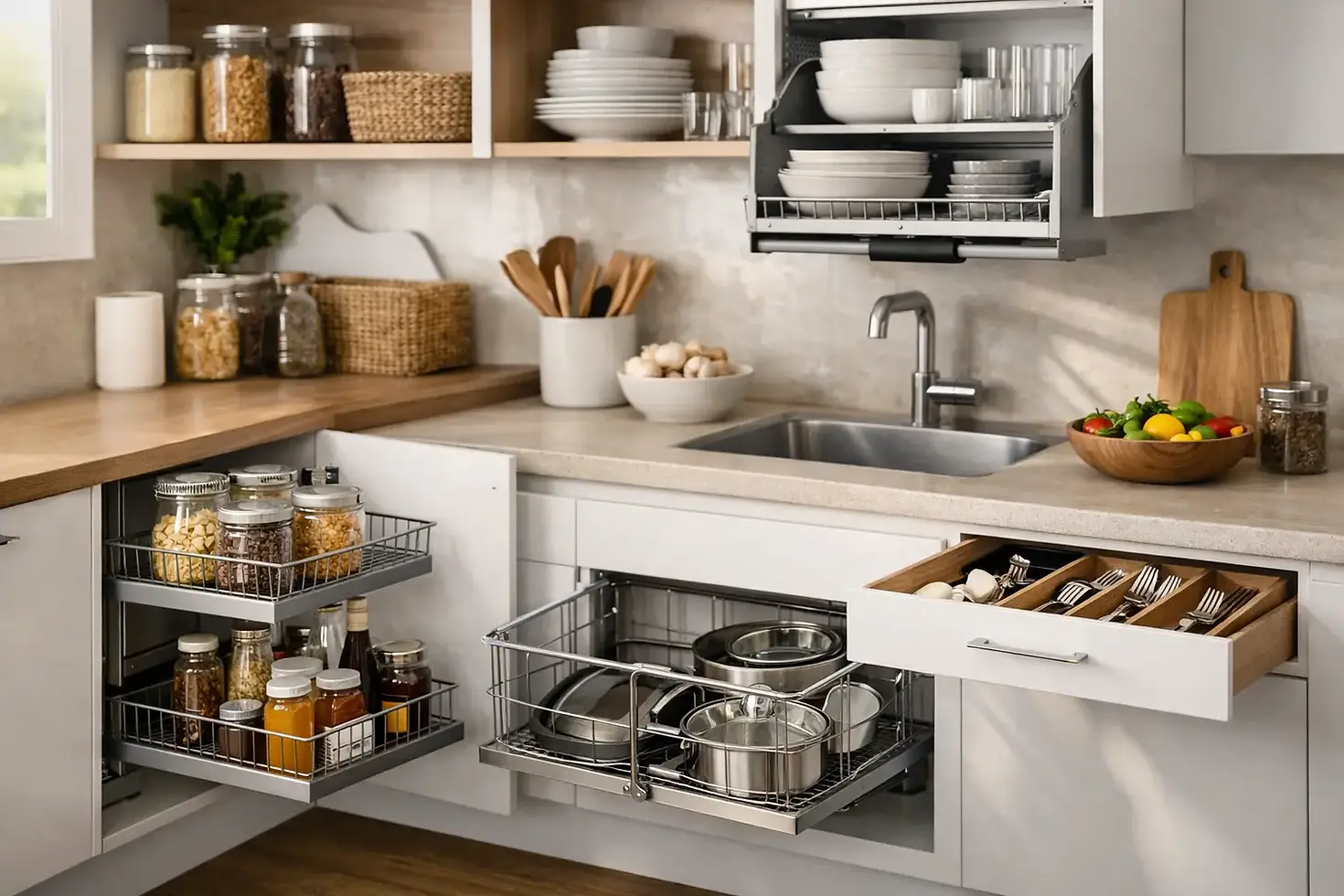
If you are still relying on lower cabinets with fixed shelves, deep drawers are often one of the biggest quality-of-life improvements you can make. Pots, pans, mixing bowls, food containers, and even dishes become easier to see and reach.
This upgrade reduces the need to kneel and dig through stacked items at the back of a cabinet. It is especially helpful for busy families and for homeowners planning to age in place. The trade-off is cost - drawer hardware and cabinet construction are typically more expensive than basic doors and shelves - but the day-to-day convenience is hard to overstate.
2. Pull-out pantry storage
A pantry cabinet with pull-out shelves or interior roll-outs makes far better use of vertical space than standard fixed shelving. Dry goods, snacks, canned items, and cooking staples stay visible instead of getting lost in the back.
This can work well in both large and compact kitchens. A tall pantry cabinet is ideal when space allows, but even base cabinets can be upgraded with pull-out inserts. If your kitchen footprint is limited, this kind of upgrade often performs better than trying to fit a walk-in pantry where it does not belong.
3. Corner cabinet solutions
Corner cabinets are notorious for wasted space. The old approach was to live with it. A better approach is to make the corner work harder with a lazy Susan, swing-out shelf system, or angled drawer design.
The best option depends on the cabinet size and your budget. Some homeowners want the most economical fix. Others would rather invest in a mechanism that gives easier access to heavier items. Either way, leaving a corner cabinet as dead space is usually a missed opportunity.
4. Built-in recycling and waste pull-outs
A freestanding garbage bin takes up floor space and interrupts the look of the kitchen. A built-in waste and recycling pull-out keeps those bins hidden, accessible, and better integrated into your prep zone.
Placement matters here. Ideally, it should sit near the main food prep area and not too far from the sink. This sounds like a small upgrade, but it has an outsized effect on how tidy and efficient the kitchen feels.
5. Drawer organizers designed into the plan
Cutlery trays are common, but custom drawer organization goes much further. Think utensil dividers, spice drawer inserts, knife storage, peg systems for dishes, and dedicated sections for wraps or food containers.
The key is planning these during the design stage, not as an afterthought. When drawers are sized for specific functions, the whole kitchen becomes easier to maintain. This is one of those details that does not always stand out in a showroom, but homeowners appreciate it every day after the renovation is complete.
6. Appliance garage or concealed small appliance storage
Toasters, coffee machines, blenders, and air fryers can crowd a countertop quickly. An appliance garage gives those items a dedicated home while keeping them easy to access.
This upgrade works best when the appliances are used often but do not need to stay fully visible. It is not the right fit for every kitchen, especially if upper cabinet space is already tight. But in the right layout, it helps preserve clean lines without making the kitchen less practical.
7. Vertical tray and baking sheet storage
Large flat items are awkward to stack, and they tend to create cabinet clutter fast. Vertical dividers for baking sheets, cutting boards, serving platters, and cooling racks solve that problem neatly.
This is a simple upgrade, but it adds real function. It works especially well beside the oven or near the prep area, where those items are most often used.
8. Under-sink storage improvements
The space under the sink is often underused because of plumbing obstacles and poor shelf access. With the right internal layout, it can hold cleaning supplies, dishwashing essentials, and backup products much more effectively.
Pull-out trays or tiered storage systems make this area far more usable. Moisture resistance is important here, so material choice matters. In a renovation, this is also a good time to look at sink size and plumbing placement, since both affect how much storage can realistically fit below.
9. Full-height cabinetry
Cabinets that stop short of the ceiling create a dust-catching ledge and leave potential storage unused. Full-height cabinetry takes advantage of the room’s vertical space and gives the kitchen a more finished, built-in appearance.
This is particularly valuable in smaller kitchens where every bit of storage matters. The uppermost sections can hold seasonal items, serving ware, or less frequently used appliances. The only caution is accessibility - not everything stored high up will be convenient for daily use, so the contents need to be chosen carefully.
10. Island storage that does more than look good
A kitchen island should not be treated as decoration with a countertop attached. If your layout includes an island, it can become one of the hardest-working storage features in the room.
Depending on size, an island can hold drawers for cookware, microwave storage, open shelving for cookbooks, or cabinets for serving pieces and small appliances. The right mix depends on how you use the surrounding cabinets. A well-designed island supports workflow. A poorly planned one just adds bulk to the room.
How to choose the right upgrades for your kitchen
Not every storage feature belongs in every renovation. The best decisions come from looking at your current frustrations first. Are your counters crowded because you lack closed storage? Are your lower cabinets hard to use? Is pantry space the main issue, or is the problem really poor drawer organization?
That is where a guided renovation process makes a difference. Rather than selecting trendy inserts one by one, it helps to step back and look at the kitchen as a system. Cabinet layout, appliance placement, traffic flow, and storage all affect each other.
A family that cooks daily will have different priorities than homeowners who entertain often. A compact urban kitchen may benefit more from full-height cabinets and drawer efficiency, while a larger kitchen might justify a dedicated pantry wall and appliance storage. There is no single checklist that suits everyone.
When storage upgrades are best done during a renovation
Some storage improvements can be retrofitted, but the best results usually happen when they are built into a larger kitchen remodel. That is especially true if you are changing the layout, replacing cabinets, or trying to solve multiple issues at once.
During a renovation, you can align storage with the rest of the design instead of forcing upgrades into an existing framework. You can also account for clearances, electrical locations, appliance specs, and cabinet dimensions from the start. That leads to a cleaner finished result and fewer compromises.
For homeowners in Ottawa planning a kitchen renovation, this is often the stage where smart storage choices have the biggest impact. A contractor-led process with design guidance helps you avoid investing in features that look impressive in isolation but do not improve the way your kitchen actually works. That practical approach is part of what makes a renovation feel less stressful and more worthwhile.
The best kitchen storage upgrades are the ones that quietly remove daily frustration. When the layout makes sense, the drawers work properly, and everything has a place, the whole kitchen feels easier to live with. That kind of improvement does not just change the room. It changes how the room supports your day.


Comments